A beautiful garden is impossible without healthy soil. But what do you do when your native backyard dirt is compacted clay, sandy, or nutrient-depleted?
For millions of homeowners, the go-to solution is Miracle-Gro Garden Soil All-Purpose. But is it actually good for your plants? And more importantly—is it the right product for your specific project?
In this review, we will break down exactly what is in the bag, the difference between "Garden Soil" and "Potting Mix" (a crucial distinction), and share our real-world testing results on tomatoes and flowers.

Read Next
First Impressions: What’s in the Bag?
When you cut open a bag of Miracle-Gro Garden Soil, the contrast with native backyard dirt is immediate.
- Texture: Dark, rich, and crumbly.
- Smell: Earthy and organic.
- Moisture: It comes pre-moistened, unlike dry topsoil.
It isn't just random dirt. It is a formulated blend of organic matter designed to fix the structure of your ground soil instantly.
Miracle-Gro Garden Soil Ingredients Breakdown
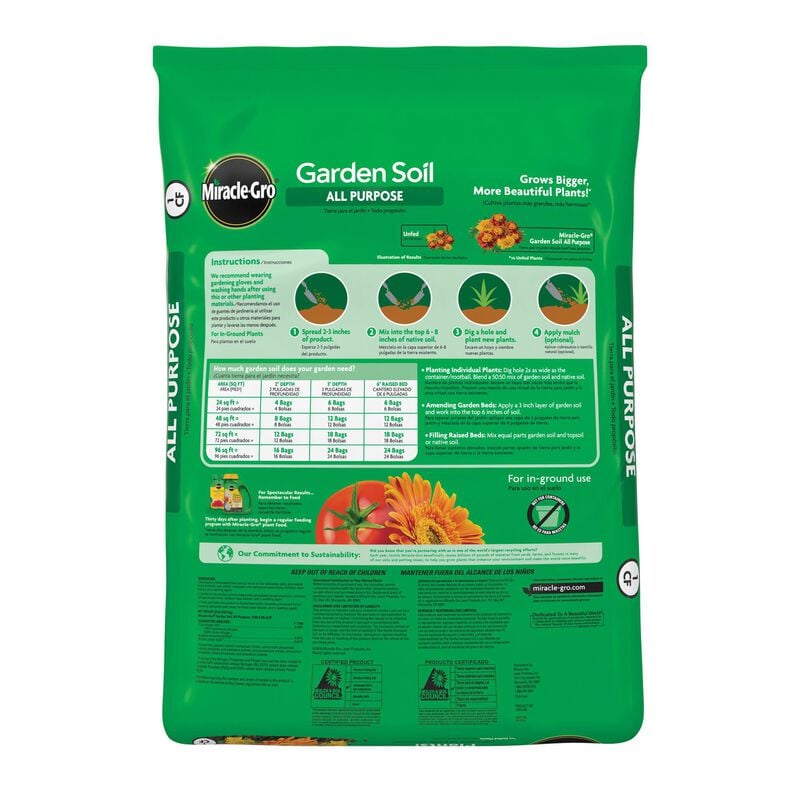
To understand why this works, you need to know what you are putting in your garden. The formula varies slightly by region (to match local sourcing), but the core components are:
- Processed Forest Products: (Aged wood fines/bark). These add structure. In clay soil, they create air pockets for roots. In sandy soil, they add bulk to hold water.
- Sphagnum Peat Moss: The gold standard for moisture retention. It acts like a sponge, holding water and releasing it slowly to plant roots.
- Coir (Coconut Fiber): A sustainable alternative to peat that helps with drainage.
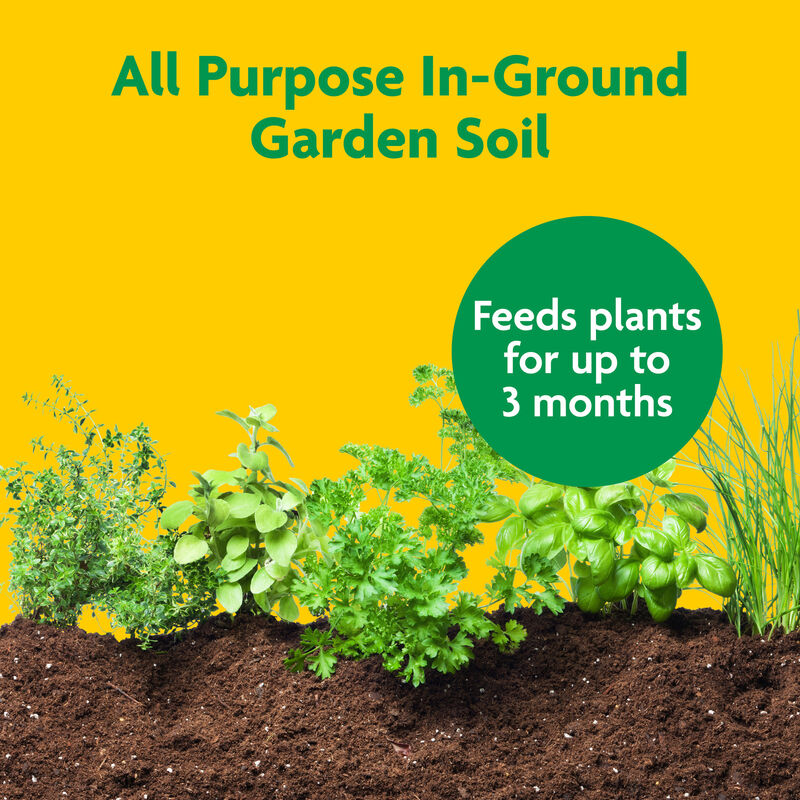
- Miracle-Gro® Plant Food: The soil is pre-mixed with continuous-release fertilizer (Nitrogen, Phosphate, Potash) that feeds plants for up to 3 months.
The #1 Mistake: Garden Soil vs. Potting Mix
Before you buy, you must understand this rule: Miracle-Gro Garden Soil is for IN-GROUND use only.
If you use this bag in a pot, container, or hanging basket, your plants will likely die. Why? Because garden soil is too dense for containers. It lacks perlite and will turn into a heavy, waterlogged brick that suffocates roots.
Quick Comparison Guide
| Feature | Miracle-Gro Garden Soil | Miracle-Gro Potting Mix |
|---|---|---|
| Best For | Flower beds, vegetable patches, in-ground planting. | Pots, containers, indoor plants. |
| Texture | Heavy, dense, moisture-retentive. | Light, fluffy, airy. |
| Drainage | Relies on the earth below it to drain. | Engineered to drain freely in a pot. |
| Price | Generally cheaper per cubic foot. | More expensive. |
- The Verdict: If you are digging a hole in the ground, buy Garden Soil. If you are planting in a pot, buy Potting Mix.
Real-World Testing: Does It Work?
We put Miracle-Gro to the test in a backyard with heavy clay soil.
Test 1: The Tomato Experiment
We planted two 'Big Boy' tomatoes side-by-side.
- Plant A: Planted directly into native clay soil.
- Plant B: Planted in a 50/50 mix of native soil and Miracle-Gro Garden Soil.
The Result: The difference was night and day. Plant A struggled to push roots through the heavy clay and grew slowly. Plant B exploded with growth within a week. The amended soil provided the loose texture roots need, and the pre-mixed fertilizer gave it an immediate nutrient boost. By harvest time, Plant B was nearly twice the size.
Test 2: Reviving a Flower Bed
We used the "Pocket Planting" method on a compacted flower bed. Instead of tilling the whole area, we dug holes for coneflowers, removed 50% of the bad clay, and mixed in Miracle-Gro. The perennials established quickly, and because of the peat moss, they required less watering during the August heat.
Pros and Cons
Pros:
- Convenience: It combines compost, peat, and fertilizer in one bag. No mixing required.
- Improvement: Instantly fixes soil structure (aerates clay, thickens sand).
- Growth: The added fertilizer guarantees vigorous growth for the first 3 months.
- Price: Affordable and widely available at any hardware store.
Cons:
- Not Organic: The fertilizer included is synthetic. If you are a strict organic gardener, look for the "Miracle-Gro Performance Organics" line instead.
- Wood Chips: Some batches contain larger pieces of wood/bark, which can be annoying if you are trying to plant tiny seeds like carrots.
- Fungus Gnats: Like many bagged soils, if stored improperly at the store (wet), it can occasionally harbor gnats.
How to Use It Correctly
Do not just dump it on top of the ground.
- Dig: Dig a hole twice as wide as your plant's root ball.
- Mix: Mix the native soil you removed with the Miracle-Gro soil at a 50/50 ratio.
- Plant: Backfill the hole with your new mixture.
- Water: Water thoroughly to settle the soil.
FAQ: Common Questions
Ideally, no. Raised beds act like large containers. You should use a specific "Raised Bed Soil" or a mixture of Potting Soil and Compost. Garden Soil can be too heavy unless you mix it with plenty of compost and vermiculite.
The slow-release fertilizer feeds for up to 3 months. After that, you should supplement with a liquid plant food or granular fertilizer, especially for hungry plants like tomatoes.
Yes, it is safe for all fruits, vegetables, and herbs.
Final Verdict
Miracle-Gro Garden Soil All-Purpose is the best "bang for your buck" amendment for average homeowners. It eliminates the need to buy separate bags of compost, peat moss, and fertilizer.
If you have poor soil and want to plant shrubs, flowers, or vegetables directly in the ground, this is a reliable, effective solution that delivers guaranteed results.
Rating: 4.5/5 Stars
Recommended for: Beginners, In-ground gardening, Clay soil amendment.
Comments
No Comments