Achieving rapid rooting for marijuana clones is crucial for successful cultivation, especially for home growers. While natural environments often promote faster root development, you can replicate ideal conditions at home with a few essential tools and techniques.
This comprehensive guide will walk you through the process of optimizing your cloning environment and plant preparation to ensure your marijuana clones establish strong roots quickly.

Read Next
- Why Fast Rooting Matters
- Step-by-Step Process to Accelerate Clone Rooting
- 1. Preparation and Initial Trimming
- 2. Precision Trimming and Rooting Solution Application
- 3. Container Placement and Temperature Control
- 4. Fertilization for Robust Root Development
- 5. Optimizing Lighting Conditions
- 6. Finalizing the Process and Encouraging Growth
- Common Things to Watch Out For
- Growing Clones in Water
- Cutting a Ripe Plant
- 💬 Feedback
Why Fast Rooting Matters
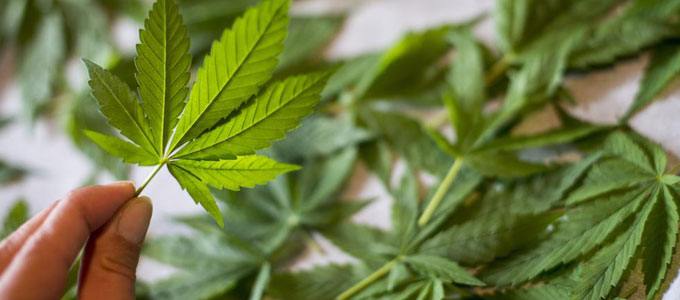
One of the biggest challenges for newly cut marijuana clones is their inability to absorb water efficiently due to the lack of roots. This can lead to dehydration and hinder growth.
By promoting rapid root development, you ensure your clones get the necessary hydration and nutrients, setting them up for robust growth. Proper trimming and environmental control are key to overcoming this initial hurdle.
Step-by-Step Process to Accelerate Clone Rooting
These six steps will help you propagate more plants easily.
1. Preparation and Initial Trimming
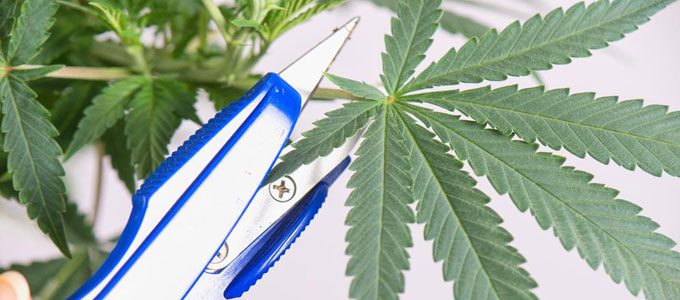
Getting Started: Don't be intimidated! While the process may seem complex at first, mastering these steps will make marijuana cultivation much easier. The foundation for fast rooting lies in proper plant preparation and environmental control.
- Leaf Removal: Carefully remove all leaves from the cutting except for the ones at the crown. Trim these remaining leaves to a diameter of 1 to 1.5 inches.
- Stem Cutting: Take cuttings from the mother plant that are three to five inches in length.
- Environmental Regulation: Maintain a consistent temperature of 72 to 74 degrees Fahrenheit around both the roots and the top parts of your clones. This stable temperature is vital for efficient root growth.
- Humidity and Light: Ensure high humidity levels and provide moderate light intensity, with a strong emphasis on the blue spectrum. These conditions collectively encourage rapid root development.
2. Precision Trimming and Rooting Solution Application
Time to Trim: Once your environmental conditions are established, you're ready to make your final cuts and prepare the clones for planting.
- Cutting Technique: Contrary to some common advice, you can use scissors for cutting, and it's not necessary to cut the plant while submerged underwater.
- Uniformity: Line up the crowns of your plant cuttings and sort them into groups of approximately 10 plants. Cut the end of each stem, ensuring that all stems within a group are of equal height.
- Rooting Aid Application: Immediately after trimming, dip the cut ends of the stems into a rooting solution or gel.
- Sterile Planting: Promptly place the dipped cuttings into a sterile planting medium.
3. Container Placement and Temperature Control
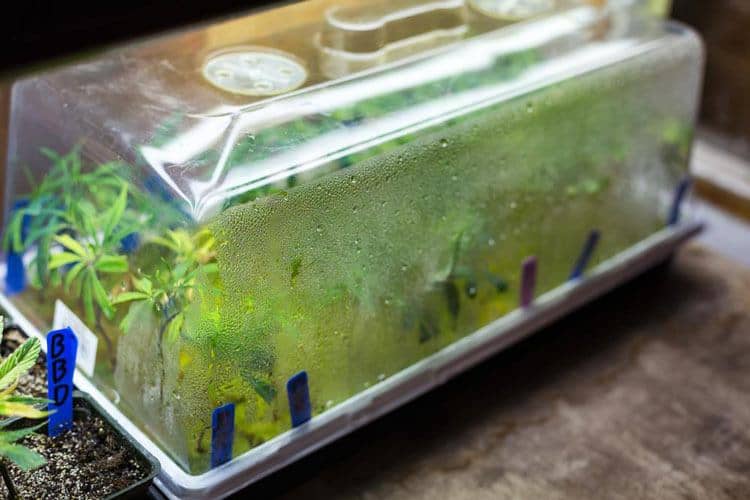
Creating the Ideal Environment: Proper container selection and consistent air temperature are crucial for successful rooting.
- Container Choice: The best options for planting are 1.5 to 2-inch square pots, or 1.5-inch square oasis or rockwool cubes.
- Moisture and Humidity: Place the marijuana cuttings in a tray and cover them with a clear plastic top to maintain high moisture levels and humidity.
- Insulation: If your shelf surface is cold, insulate it with a Styrofoam sheet to ensure a consistent air temperature around your clones.
- Heating Mat: If the ambient air temperature is low, invest in a horticultural heating mat to maintain the recommended temperatures.
- Initial Waiting Period: Keep the clones covered for three days. After this period, you can remove the plastic top and water your plants.
4. Fertilization for Robust Root Development

Nutrient Management: Proper fertilization is key to supporting strong root growth.
- First Watering: Do not use any fertilizers during the first watering after removing the cover.
- Subsequent Waterings: For the second and third waterings, begin using a fertilizer. A recommended flowering formula for marijuana is either a 15-30-15 or a 5-8-3 type. The critical factor is a high phosphorus concentration.
- Phosphorus Concentration: Look for the middle number in the N-P-K (Nitrogen-Phosphorus-Potassium) ratio to identify phosphorus concentration. Aim for a concentration of 0.25% or 400 parts per million (ppm).
- Post-Third Watering: After the third watering, switch to a different fertilizer formula, such as 18-18-21 or 16-16-16.
5. Optimizing Lighting Conditions
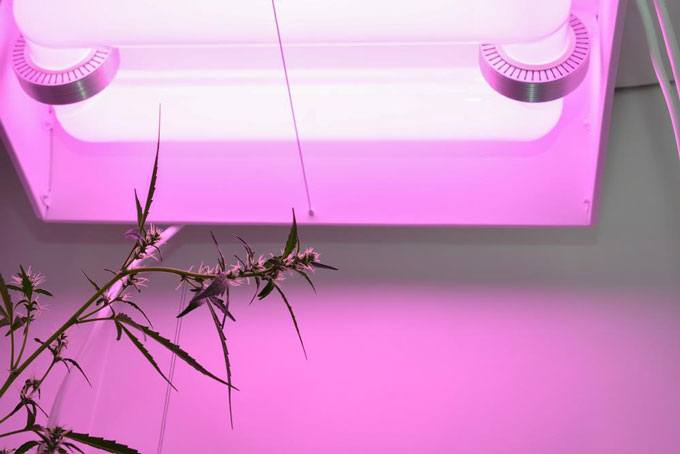
Illuminating Your Garden: Adequate and appropriate lighting is essential for healthy clone development.
- Fluorescent Tubes: Light your garden with at least 5,000-Kelvin fluorescent tubes. GE Chroma models are highly popular and efficient.
- Coverage: Aim for one fluorescent tube per foot of garden width.
- Cloning Space: For a 1’ x 4’ cloning space, use a single 4-foot tube.
- Compact Fluorescents: If using compact fluorescent lamps, provide 13-watt lamps per square foot.
6. Finalizing the Process and Encouraging Growth
Visible Roots and Continued Growth: The final stages involve monitoring root development and gradually increasing light to promote further growth.
- Root Visibility: After approximately 7 days (though it may sometimes take longer), you should see visible roots.
- Fertilizer Upgrade: Once roots are visible, increase your fertilizer formula concentration to 800 ppm.
- Holding Clones: If you plan to wait before transplanting your marijuana clones, maintain lighting at 10 watts per square foot. At this stage, plants will grow slowly, but their growth rate will increase over time.
- Accelerating Growth: To further accelerate growth, gradually add more light tubes.
- Root Protection: To stabilize strong roots, consider using a root protector. Following these steps will significantly increase your plant's growth rate.
Common Things to Watch Out For
While our guide provides a solid framework, be aware of these potential pitfalls to ensure successful cloning.
Growing Clones in Water
While some methods suggest rooting clones in water, we generally advise against it due to the high risk of algae growth.
- Algae Risk: Algae can easily proliferate in water, clogging systems and significantly reducing your plants' growth rate.
- Mitigation: If you choose to root in water, use a dark container. This won't eliminate algae entirely but will substantially reduce its growth, which is crucial for long-term success.
Cutting a Ripe Plant
It is possible to clone from riper or flowering plants, but careful selection of cuttings is important.
- Shaded Cuttings: We recommend taking cuttings from shaded areas of the plant, as the buds in these regions are less matured.
- Stem Hardness: Harder stems, typically found on more mature parts of the plant, have a more difficult time rooting. For optimal rooting speed, select buds that haven't matured significantly.
By following these guidelines, you'll be well on your way to successfully cloning marijuana with strong, fast-growing roots, leading to a more productive and efficient harvest.
Comments
No Comments